Convergent Evolution Uses Analogous Features to Describe
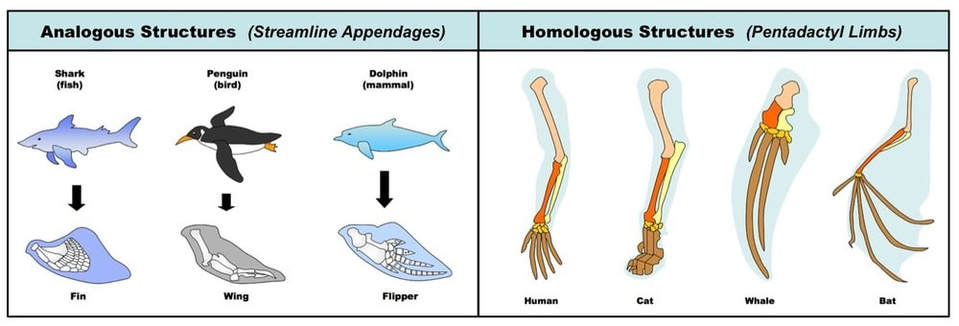
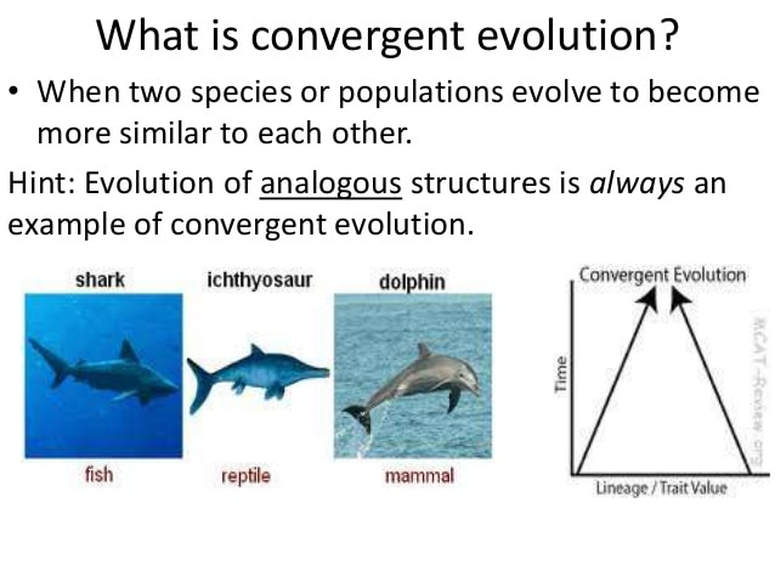
Ancestor 18 Convergent evolution uses analogous features to describe A distantly related organisms that have structures for different functions. Another example of convergent evolution is the body shape of dolphins and sharks.
Ib Hl 5 1 U4
Two mammals that have adapted to similar environments in a similar way.

. Independent evolution of similar features in different lineages is convergent evolution. Up to 24 cash back Convergent Evolution. Traits that arise through convergent evolution are referred to as analogous structures.
Usually these two species live in similar climates and environments in different parts of the world that favor the same adaptations. Convergent evolution is when two species that are not related via a recent common ancestor become more similar. Convergent Evolution Explained With Examples.
Up to 24 cash back Thus understanding the concepts of homologous features and analogous features will be critical for furthering their knowledge on evolution. C two mammals that have adapted to similar environments in. Written by the MasterClass staff.
The ultimate cause of convergence is usually a similar evolutionary biome as similar environments will select for similar traits in any species occupying the same ecological niche even if those species are. One way species change over time is called convergent evolution. Convergent evolution uses analogous features to describe.
Convergent evolution is when two unrelated species undergo several changes and adaptations to become more similar. When the same or similar niches are available in. Birds and bats did not inherit wings from a common ancestor with wings but they did inherit forelimbs from a common ancestor with forelimbs.
Convergent evolution refers to the process where different organisms evolve to form similar traits despite not being closely related. B the independent evolution of similar features in different lineages. They are contrasted with homologous structures which have a common origin.
Analogous structures can rise when different organisms from different lineage face similar problems. DNA sequences in many human genes similar to chimps. A distantly related organisms that have structures for different functions.
Interestingly though bird and bat wings are analogous as wings as forelimbs they are homologous. Though dolphins and sharks. The independent evolution of similar features in different lineages D.
This occurs when independent species have had to evolve to survive in similar habitats or have a specific niche to fill. Convergent evolution uses analogous features to describe. Features that share common ancestry but not necessarily similar function.
Analogous features share _____ function but not. Two mammals that have adapted to similar environments in similar ways. Convergent evolution uses analogous features to describe.
Thus the convergent evolution causes similar structures in different lineages of organisms. They should be contrasted with homologous structures which have a. Features that share common ancestry but not necessarily similar function B.
Further material covered in the next lesson will include an exploration of why convergent evolution or divergent evolution would occur. Nov 8 2020 2 min read. The analogous features then help that species survive in the environment.
These similar structures are called analogous structures. C two mammals that have adapted to similar environments in. X with y and z alone.
A similarity may reside at the phenotypic level in which case the lineages share the overt trait but the underlying DNA. Convergent evolution uses analogous features to describe A. In other words the fact that the structures are analogous does not reflect homology.
Convergent evolution occurs when species occupy similar ecological niches and adapt in similar ways in response to similar selective pressures. Sugar glider and flying squirrel. There tends to be a finite number of ways for nature to deal with certain challenges.
Two species occupying a similar habitat may exhibit common physical traits. Distantly related organisms that have structures for different functions C. Analogies are the result of convergent evolution.
Convergent evolution the repeated evolution of similar traits in multiple lineages which all ancestrally lack the trait is rife in nature as illustrated by the examples below. Structures that are the result of convergent evolution are called analogous structures or homoplasies. B the independent evolution of similar features in different lineages C two mammals that have adapted to similar environments in similar way.
Two examples of convergent evolution. Convergent evolution refers to the evolution in different lineages of structures that are similar or analogous but that cannot be attributed to the existence of a common ancestor. 31 Convergent evolution uses analogous features to describe A distantly related organisms that have structures for different functions.
If these species come from different biological ancestors yet still have much in common their similarities may be the result of convergent evolution. Bird wing and butterfly wing. Although the two species are not at all closely related they may appear quite similar as a result of.
The wings of bats and the wings of insects are evolved from completely different original structures. Humans and chimps share a relatively recent common ancestor. B the independent evolution of similar features in different lineages.
Dolphins VS Sharks How do analogous structures evolve. Most of the time the reason behind convergent evolution occurring is the build-up of adaptations over time to fill a certain niche. You have probably noticed that dolphins and sharks both have a streamlined body shape with a triangular fin on the back and two side fins.

Homologous And Analogous Structures Ppt Video Online Download
Ib Hl 5 1 U4
Structural Evidence Bioninja
0 Response to "Convergent Evolution Uses Analogous Features to Describe"
Post a Comment